Stay up to date with the latest news
Subscribe to our telegram channel

Kyrgyzstan, Central Asia, water resources, water management, Erlist Akunbekov, glaciers, climate change, Issyk-Kul, water compensation, sustainable development, regional cooperation
Tashkent, Uzbekistan (UzDaily.com) — Kyrgyzstan has called for the introduction of mutually beneficial compensation mechanisms in Central Asia’s water and energy sector and urged stronger regional cooperation amid accelerating glacier melt and declining water resources.
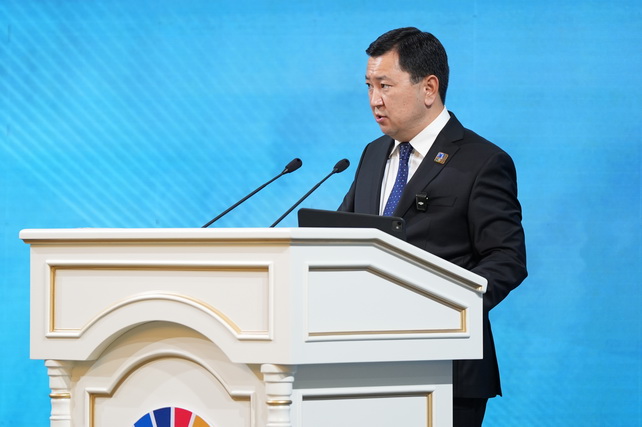
The statement was made by Erlist Akunbekov, Deputy Chairman of the Cabinet of Ministers and Minister of Water Resources, Agriculture and Processing Industry of Kyrgyzstan, at the opening of the 4th High-Level International Conference on the International Decade for Action “Water for Sustainable Development” 2018–2028, being held in Tajikistan.
According to Akunbekov, a significant reduction in glacier coverage and declining precipitation have already led to water shortages and could result in serious socio-economic and environmental consequences for the entire region.
“Today, glacier melt is no longer the problem of a single country — it is a challenge for all of Central Asia. Without glaciers there will be no water in the rivers, and without water in the rivers there will be no life in the valleys,” Akunbekov said.
The minister noted that Kyrgyzstan has developed a National Water Strategy through 2040 and adopted a new Water Code providing modern mechanisms for regulating water relations, strengthening the protection of water bodies and promoting integrated water resources management.
He stressed that Kyrgyzstan is the only country in Central Asia whose water resources are formed entirely within its own territory. At the same time, the country uses less than 30% of its own water resources, while a substantial share flows to neighbouring states.
According to Akunbekov, Kyrgyzstan bears significant costs for maintaining hydraulic infrastructure and protecting water source areas. Approximately US$80 million was allocated to the water sector in the past year alone, while total spending over the last five years reached US$259 million.
In this regard, Kyrgyzstan once again called for the introduction of economic compensation mechanisms for upstream countries that generate the region’s water resources. The minister said such instruments would help maintain and modernise water infrastructure for the benefit of all Central Asian states.
Particular attention was also given to climate change and the accelerating retreat of glaciers. Akunbekov said Kyrgyzstan is implementing a number of initiatives under the Five Years of Action for Mountain Regions and invited conference participants to attend the Second Global Mountain Summit “Bishkek+25”, scheduled for 2027.
The minister also expressed concern about the condition of Lake Issyk-Kul. According to him, the lake’s water level has fallen by nearly 14 metres over recent decades, while the number of rivers flowing into it has declined by more than threefold, from more than 100 to 30. Kyrgyzstan has therefore proposed that international partners and donors jointly develop a comprehensive programme for the preservation and restoration of the lake.
Conference participants discussed water resource management and climate-related challenges, noting that freshwater reserves are expected to decline further by 2050.
The discussions concluded with a consensus that sustainable water use in the region will require closer cooperation among Central Asian states and international partners.