Stay up to date with the latest news
Subscribe to our telegram channel

Pan-Asian Power Grid: ADB Pushes Energy Integration
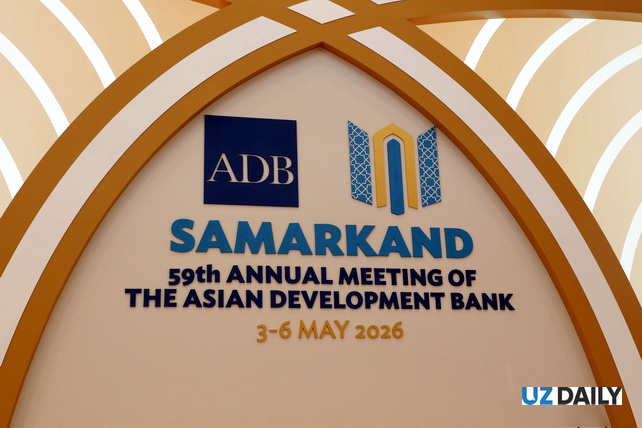
Tashkent, Uzbekistan (UzDaily.com) — The creation of a unified Pan-Asian electricity grid capable of serving around 200 million people with reliable, affordable and clean power was the central theme of a seminar held during the 59th Annual Meeting of the Asian Development Bank (ADB).
Experts, officials and ADB President Masato Kanda discussed an ambitious initiative to integrate national and subregional power systems into a single transcontinental network, with a total investment mobilization target of about 50 billion US dollars.
Ian Rosenow, an Oxford University professor who presented the analytical framework for the discussion, warned that the window for decisive action may be closing sooner than expected. He said investment decisions worth hundreds of billions of dollars will be made in the region within the next five to ten years.
According to his modelling of high-renewable energy systems, deeper cross-border connectivity could reduce total system costs by 18% and electricity prices for consumers by nearly one-third. The research also indicated that 85% of the benefits of an optimally expanded grid could be achieved with only 44% of the total required investment, meaning full build-out is not necessary from the outset.
Uzbekistan, which was a net electricity importer just a decade ago, has become a key player in the regional energy transformation. Deputy Prime Minister Jamshid Khodjaev said the country has attracted about 35 billion US dollars in energy investments in recent years and commissioned 9 gigawatts of new generation capacity, bringing total electricity production to nearly 85 billion kilowatt-hours per year.
Solar and wind capacity has exceeded 6 gigawatts, with around 4 gigawatts of additional renewable capacity being added annually.
In 2025 alone, Uzbekistan exported about 500 million kilowatt-hours of electricity to Kazakhstan, 400 million kilowatt-hours to Tajikistan, 1.2 billion kilowatt-hours to Kyrgyzstan, and more than 2 billion kilowatt-hours to Afghanistan, gradually positioning itself as a producer, transit corridor and regional integrator of power systems.
In a longer-term outlook, the country is considering exporting green electricity to Europe via a high-voltage direct current line running through Kazakhstan, the Caspian Sea, Azerbaijan and Georgia, and is also exploring a potential connection with China’s power grid.
A different but equally notable experience was presented by Palau’s Governor Kaleb Udui. The country, which relies on imported fossil fuels for about 90% of its energy needs, has set a goal of transitioning to 100% renewable energy by 2032. A 13-megawatt solar power plant is already operational, distributed rooftop solar generation is expanding, and net metering legislation has been adopted.
However, he stressed that physical grid interconnection with neighbours is not possible for an island state, making institutional connectivity particularly important. Regional platforms such as the Pacific Energy Association and the Office of Pacific Energy Regulators Alliance enable the exchange of standards, experience and technical solutions. Promising areas for the archipelago include green hydrogen, geothermal and ocean thermal energy.
Germany’s experience in cross-border energy integration drew particular attention. Parliamentary State Secretary Johann Saathoff recalled Europe’s long and difficult path toward a common energy market and warned against repeating past mistakes.
He highlighted the issue of “redispatching”: due to bottlenecks in transmission networks, Germany spends up to 3 billion euros annually on forced curtailment of offshore wind farms while simultaneously activating gas-fired power plants. He said a key condition for success in Asia would be the creation of a multilateral organization modeled on Europe’s ENTSO-E, which harmonizes technical standards, market rules and grid codes.
Johann Saathoff also stressed the need for a legal framework for cross-border grids, trust-building among stakeholders from governments to local communities, and a strong focus on digitalization and transmission efficiency.
ADB President Masato Kanda said the bank is ready to deploy a full range of financial instruments — loans, guarantees, equity participation, blended finance and grants — tailored to country-specific needs and the long-term nature of infrastructure projects.
As a practical example, he cited the mobilization of 1.2 billion US dollars for a solar generation project with storage in Uzbekistan, which will supply electricity to 600,000 households.
A newly established Regional Energy Connectivity Fund for South Asia, worth 20 million US dollars and supported by Australia, Canada, Germany, the United Kingdom and the European Union, is intended to finance early-stage infrastructure project preparation.
Khodjaev also cited a practical example of cross-border risk-sharing: Uzbekistan and Kazakhstan are jointly participating in financing the Kambarata-1 hydropower plant in Kyrgyzstan, with a capacity of over 1 gigawatt and a cost of about 1 billion US dollars. Risk distribution among multiple states and consumers makes the project bankable and attractive to institutional investors.
Concluding the discussion, ADB President Masato Kanda outlined the initiative’s ultimate goal: the creation of an interconnected regional system that ensures collective resilience and inclusive growth.
He said 50 billion US dollars is only a means, while the real objective is to improve the lives of 200 million people — especially the poorest and most vulnerable — through reliable, affordable and clean energy.