Stay up to date with the latest news
Subscribe to our telegram channel

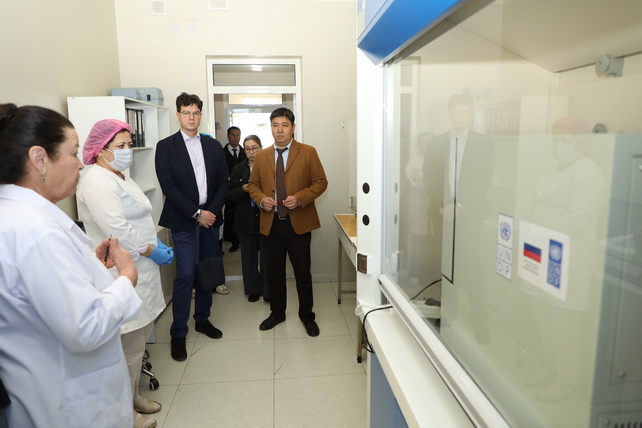
UNDP Advances Sustainable Projects in Aral Sea Region
Tashkent, Uzbekistan (UzDaily.com) — The Aral Sea region is facing a complex set of interconnected environmental and socio-economic challenges, including environmental degradation, water scarcity, declining agricultural productivity, limited access to basic services, and high vulnerability to climate change.
This is stated in materials from the United Nations Development Programme (UNDP) in Uzbekistan, which, together with the Ministry of Agriculture of the country and the Council of Ministers of the Republic of Karakalpakstan, is implementing a large-scale project to strengthen the resilience of local communities.
The initiative, titled “Strengthening the resilience of local communities and promoting green and inclusive development in the most vulnerable communities of the Aral Sea region,” is being implemented with financial support from the Government of the Russian Federation. The project is based on a cross-sectoral approach covering food security, access to water, climate adaptation, employment, and economic inclusion of vulnerable population groups.
UNDP emphasized that the complex nature of the region’s challenges requires integrated solutions, as isolated measures are insufficient to deliver long-term impact. Sustainable development is therefore viewed as the result of coordinated actions aimed at improving multiple aspects of local livelihoods simultaneously.
One of the key components of the project is the development of greenhouse farming. More than ten energy-efficient greenhouses equipped with water-saving irrigation systems have already been installed in pilot districts. The measure is intended to strengthen food security, support adaptation to water scarcity, and create stable income sources for farmers.
The project includes the example of farmer Atajan Nurjanov from the “Abat” mahalla in Kegeyli district, who previously faced irrigation water shortages. With support from the initiative, a 489-square-meter greenhouse was installed on his farm, enabling annual production of around five tons of vegetables, including cucumbers, and providing additional income for his family.
Another component of the program introduces water-saving technologies in open-field agriculture. In Karauzyak district, portable sprinkler irrigation systems were installed across 13.6 hectares, reducing water consumption by 50% and increasing yields by approximately 20%.
Particular attention is given to ensuring access to safe drinking water. In one settlement in Karauzyak district, a desalination station was upgraded with new equipment with a capacity of 16 cubic meters per hour, along with 11.8 kilometers of water supply networks. As a result, 1,520 residents gained access to drinking water meeting sanitary standards.
The project also covers livestock farming as an important source of income for rural households. In Kegeyli district, science-based livestock feeding methods were introduced and equipment for feed production was provided, increasing productivity by 40%. Efforts are also underway to restore degraded pastures.
Additional support is being provided for small rural businesses. In Kanlikul district, assistance was extended to a mini-bakery run by entrepreneur Umit Seitova, where expanded production created jobs for women and strengthened local food supply chains.
Monitoring missions conducted during implementation have highlighted progress in agriculture, sanitation infrastructure, and water supply. According to UNDP, more than 4,300 residents of remote areas have gained access to clean water since the program’s expansion, alongside the creation of new jobs.
UNDP noted that the project demonstrates the effectiveness of strategic partnerships in addressing interconnected environmental and socio-economic challenges in the Aral Sea region.
The initiative contributes to the Sustainable Development Goals and aims to build a more resilient development model through climate-adapted agriculture, improved water access, and support for local economies.