Stay up to date with the latest news
Subscribe to our telegram channel

Uzbekistan-Iran Trade Surges 48% Ahead of Joint Commission
Tashkent, Uzbekistan (UzDaily.com) — Bilateral trade between Uzbekistan and Iran has surged nearly 50% in four months — and both governments are moving quickly to institutionalise that momentum with a formal intergovernmental session before the year is out.
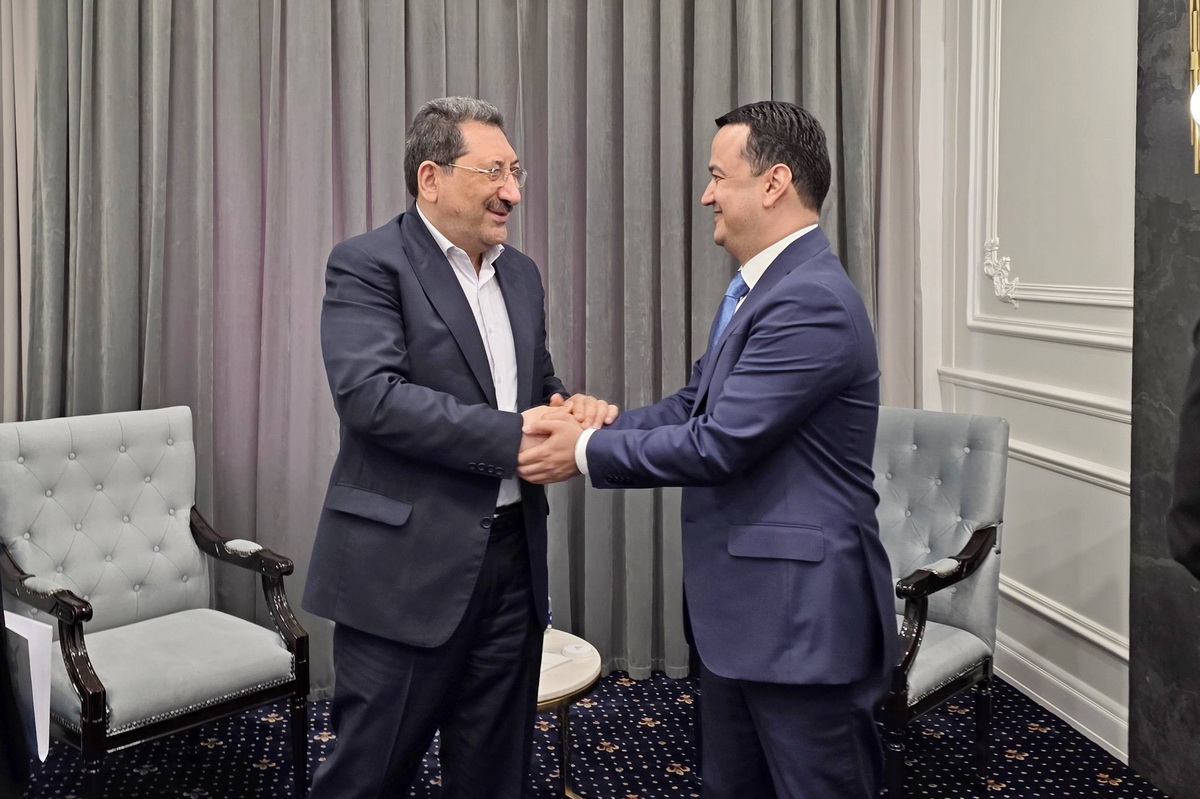
The agreement to convene the 17th meeting of the Uzbek-Iranian Intergovernmental Commission in the fourth quarter of 2026 was reached on the sidelines of the IV SCO Member States Industry Ministers' Meeting in Bishkek. Uzbekistan's delegation was led by Minister of Investments, Industry and Trade Laziz Kudratov, who met with Iran's Minister of Industry, Mines and Trade Seyed Mohammad Atabak.
The trade figures underpinning the meeting are striking. Bilateral turnover between the two countries rose 48.1% in January–April 2026 compared with the same period a year earlier — a pace that substantially outstrips Uzbekistan's already robust overall export growth recorded in the same window.
Investment ties are deepening in parallel. As of April 1, 2026, 228 enterprises with Iranian capital participation were operating on Uzbek territory, reflecting a sustained and expanding Iranian commercial footprint in the Central Asian republic.
The Bishkek talks covered three strategic axes: broadening trade and economic cooperation, deepening industrial co-production, and developing transport and logistics connectivity — the latter a particularly significant area given Uzbekistan's landlocked geography and Iran's role as a potential corridor to Persian Gulf and broader Middle Eastern markets.
Both sides confirmed their interest in expanding practical cooperation and implementing joint projects across priority economic sectors, setting the stage for the upcoming commission session to translate ministerial-level intent into concrete bilateral agreements.
The meeting took place within the SCO framework, underscoring how Central Asia's multilateral platforms are increasingly serving as catalysts for bilateral deal-making between member and observer states on the organisation's eastern and southern flanks.