Stay up to date with the latest news
Subscribe to our telegram channel

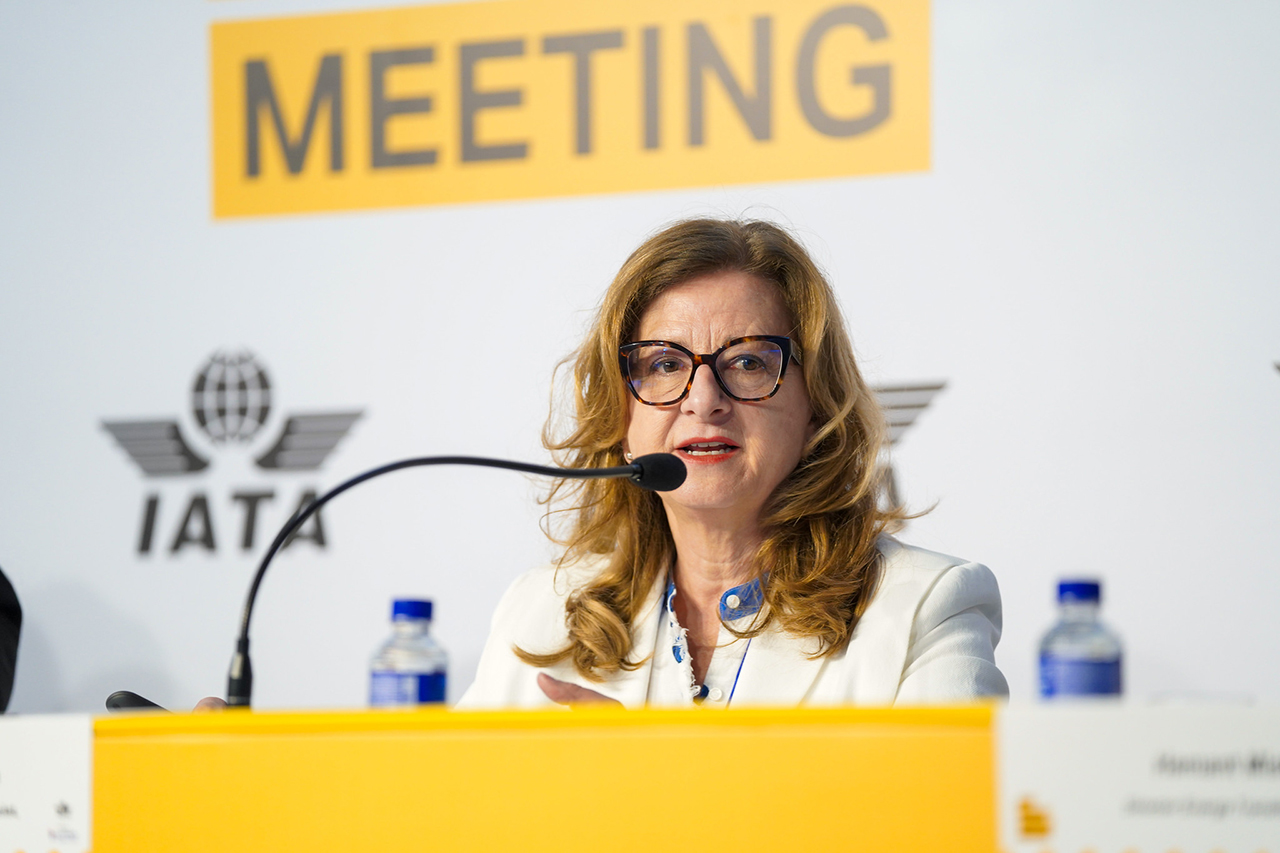
Marie Owens Thomsen / Photo: IATA
Tashkent, Uzbekistan (UzDaily.com) — A backlog of more than 18,000 undelivered aircraft — equivalent to over half the world's active commercial fleet — is crippling aviation's ability to cut costs, reduce emissions, and grow capacity, the International Air Transport Association warned at its annual general meeting in Rio de Janeiro on Sunday, 7 June.
The warning from IATA's chief economist Marie Owens Thomsen came as the airline industry grapples simultaneously with a fuel price shock triggered by the closure of the Strait of Hormuz in February and a supply crisis rooted in the COVID-19 pandemic that has yet to be resolved.
"We have a backlog of over 18,000 aircraft that have not been delivered, and 18,000 aircraft is more than half the active fleet," Owens Thomsen told reporters at a media briefing. "So just to give you an impression of how serious this problem is — when we don't get those aircraft, the whole system becomes less efficient. We increase our costs, everything."
Deliveries Still Below 2018 Levels
According to IATA's June 2026 Global Outlook for Air Transport, aircraft deliveries this year are forecast to reach approximately 1,794 units — still below the 1,816 delivered in 2018, before the pandemic disrupted manufacturer supply chains. Projections show a recovery to around 2,357 aircraft in 2027, but Owens Thomsen cautioned that the forecast was likely over-optimistic.
"The way this forecast works is that it just pushes out the non-delivered aircraft to the next year," she said. "It is most unlikely that we will get all of those projected aircraft in 2027."
IATA estimates the hypothetical delivery gap — measured against a scenario where activity had remained on its pre-pandemic trend — stands at approximately 5,600 aircraft. Airlines have absorbed the shortage by stretching fleet utilization to record levels, deferring retirements of ageing jets, and packing more passengers into each flight. Taken together, these adjustments amount to absorbing an effective shortage of approximately 3,170 aircraft, the report said.
Older Fleets, Higher Costs
The consequences extend well beyond capacity constraints. The average age of the global fleet has risen to more than 15 years — up from 13.7 years before the pandemic — forcing airlines to spend more on maintenance while operating jets that burn more fuel per flight.
"We are still talking about the supply chain," Owens Thomsen said. "We have a fleet that's 15.2 years old on average, whereas it used to be 13.7 years. And of course, with older aircraft come more maintenance and all kinds of associated issues."
The report documents a halt in the industry's long-running fuel efficiency improvements. Fuel consumption per available tonne-kilometre has flat-lined since 2024 after declining nearly every year since the 1990s.
"The improvement has stalled since 2024," Owens Thomsen said. "So here we are, trying to decarbonize our industry, and we're not getting the support that we need from our aircraft manufacturers. That fact impedes our progress towards decarbonization."
Lead Times Stretch to Seven Years
The shortage has also fundamentally altered fleet planning horizons for airline executives. Where an aircraft order once translated into delivery within two to three years, airlines placing orders today face waits of up to seven years, Owens Thomsen said.
"Airlines need to realize that it's going to take up to seven years before they get that aircraft," she told reporters. "You really need to be clear-eyed as an airline CEO to know what the world is going to look like in seven years' time and what aircraft you are going to need when that time comes."
The total order backlog reached 18,100 aircraft in May 2026, equal to nearly 60 percent of the currently active fleet, IATA data showed.
Lease Rates at Record Highs
Aircraft lease rates have risen to record levels as a result, the outlook report noted, with mid-life jets trading sharply higher on the secondary market as carriers unable to secure new deliveries compete for available assets. This dynamic raises capital intensity across the industry at precisely the moment when profits are being squeezed by the fuel shock.
With the industry already absorbing a near-70 percent year-on-year rise in jet fuel prices following the Hormuz closure, IATA projects net profit for the global airline industry will fall to USD 23 billion in 2026, cutting the net margin to just 2 percent — the weakest outcome since the pandemic years. Net profit per passenger stands at USD 4.5.
"Revenues go up by 9.5 percent, so we have revenues in excess of a trillion dollars," Owens Thomsen said. "But on the expenses side, expenses are rising more quickly than revenue, and this is how we end up with this net profit margin of 2 percent."
A Compounding Effect
Owens Thomsen framed the aircraft shortage as a structural hangover from COVID-19 that has layered onto successive crises — a pattern she said the industry, and policymakers, consistently fail to appreciate.
"Every crisis brings with it a certain amount of permanent impact," she said. "And then the next crisis comes, and the next crisis comes, and it just sort of layers like a thousand-layer cake. I don't really know why, as human beings, we insist in talking about how things are going to go back to normal, because they never do."
Global passenger traffic is forecast to grow by just 2.1 percent in 2026, roughly half the rate IATA projected in December 2025 before the Hormuz crisis, while cargo demand growth is expected to slow to 0.7 percent. The aircraft shortage may itself be suppressing additional demand: IATA analysis suggests capacity constraints reduced demand growth by 1.5 to 2 percentage points in 2025 alone, as passengers were priced out or unable to secure seats during peak periods.
IATA said it expects a next update to the Global Outlook in December 2026.