Stay up to date with the latest news
Subscribe to our telegram channel

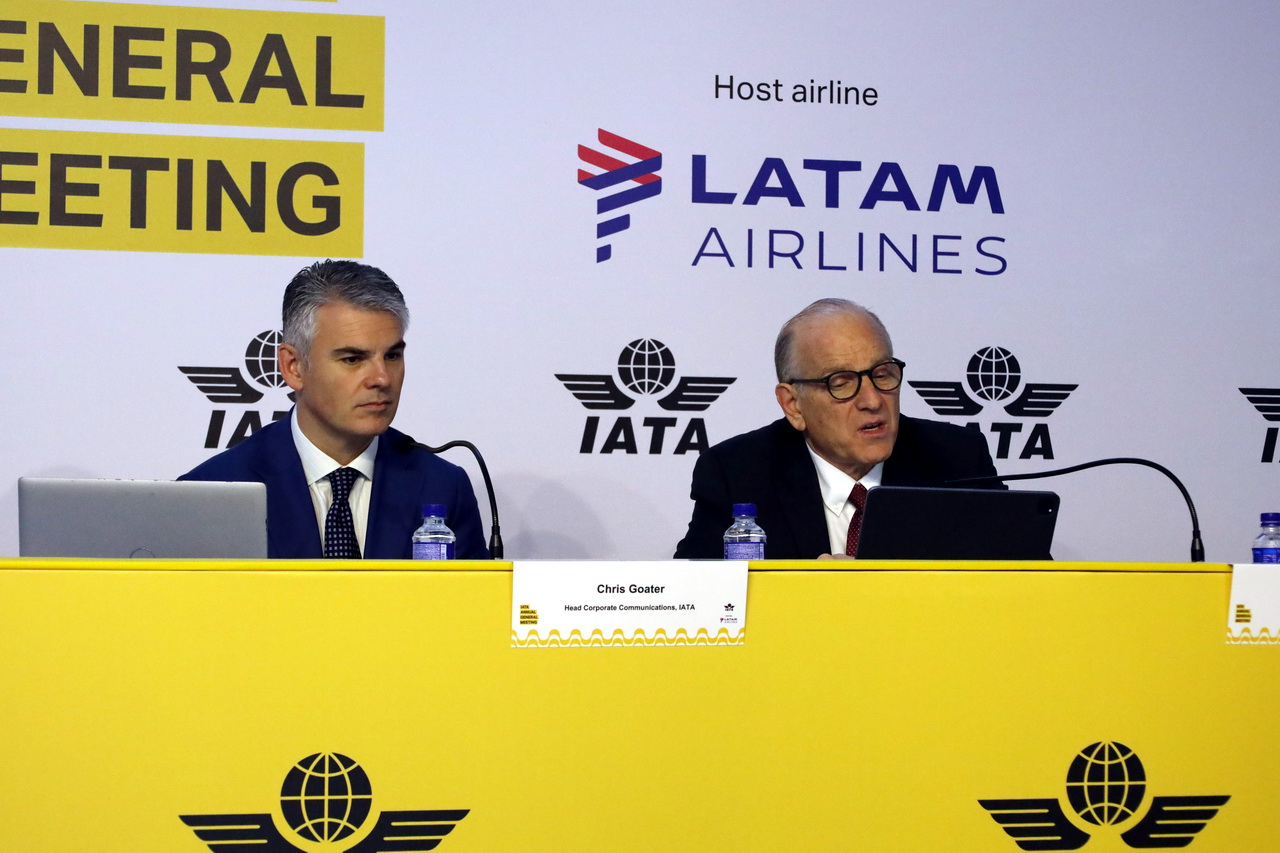
European aviation under pressure from EES delays, taxes and shifting demand — IATA
Tashkent, Uzbekistan (UzDaily.com) — European aviation is entering one of its busiest summer seasons in years carrying a heavy load of structural and operational pressures, from a geopolitical crisis reshaping passenger demand to a biometric border system already causing severe disruption at major airports. That assessment was delivered on Saturday, June 6, by Rafael Schvartzman, IATA's regional vice president for Europe, speaking at the organization's 82nd Annual General Meeting and World Air Transport Summit in Rio de Janeiro.
Demand holds — but the pattern is shifting
Revenue per available seat kilometer among European carriers rose just 0.8 percent in April — a marked slowdown that Schvartzman attributed directly to the ongoing Iranian conflict and its effect on airspace availability and consumer confidence. Forward bookings for May and June are not growing. The summer is not lost, Schvartzman said, with load factors remaining high — but the composition of demand has changed. Europeans are traveling closer to home: bookings on routes outside Europe are falling while intra-European flights have edged upward. A growing share of passengers are booking at the last moment, reflecting broader uncertainty.
"There is a tendency toward late bookings due to uncertainty," Schvartzman told reporters. "At the same time, more people are choosing nearby destinations. That is why European demand looks relatively resilient in this environment."
Bookings to North America have fallen by approximately 6 percent. Schvartzman acknowledged concern, warning that an autumn demand slowdown could expose structural vulnerabilities if cost pressures — taxes, airport charges, fuel costs — are not addressed.
EES: technology not ready for peak season
The European Entry/Exit System — the EU's new biometric border control mechanism for third-country nationals — is already operational in several countries and is already generating serious disruption. By all assessments, it is the most acute operational challenge facing European airports this summer.
Schvartzman was unequivocal. Delays and missed connections are already being recorded in Portugal, Spain, Italy, Greece and Belgium — before peak season has even begun. The core issue is throughput: processing a passenger under the old system took 20 to 25 seconds. EES, even when functioning normally, requires 90 seconds per person. When technical failures occur — and they occur regularly — waiting times increase sharply.
"We are talking about waits of three, four, five, six hours — that is unacceptable," Schvartzman said.
He set out four urgent demands on EU member states: ensure adequate border staffing during peak hours, noting that flight schedules are known in advance and there is "no excuse" for understaffing; guarantee that kiosks and gates function properly with staff available to assist passengers; deploy the EES application across the entire EU rather than in a handful of countries; and activate the suspension mechanism before queues become unmanageable.
IATA is also calling on the European Commission to extend the partial suspension of EES checks beyond the current September 7 deadline, and to allow on-demand suspension in acute situations. Any extension of the flexibility mechanism would require changes to EU legislation.
"September 7 comes very quickly," Schvartzman warned. "And for flexibility to be maintained beyond that date, the law needs to change — and that is not a small thing."
EU261 reform: regulation as a political football
Negotiations between the European Parliament and the EU Council on reforming Regulation EU261/2004 — the bloc's foundational passenger rights law — have entered their final stages. Schvartzman's assessment was blunt: the process has "gone significantly off track."
The regulation costs the aviation industry approximately 8 billion euros per year, or around 8 euros per passenger. Yet 99 percent of passengers never receive compensation, he noted.
IATA's central argument is that the existing three-hour compensation threshold creates perverse incentives. An airline at risk of exceeding a three-hour delay may choose to cancel the flight outright to avoid paying compensation, leaving the passenger worse off than a delay would have.
IATA is pushing for the threshold to be raised to five hours. The Council's compromise — four hours for short-haul flights and six for long-haul — represents "movement at least in the right direction." But if the Parliament insists on retaining the three-hour threshold, maintaining the status quo would be less damaging than adopting such a "reformed" regulation.
"If the reform does not deliver real improvements, it is better to keep the status quo and return to the issue later," he said.
Taxes: a brake on growth in key markets
Sweden abolished its passenger tax in July last year. Germany has taken a "modest step" — a reduction in its air travel tax from July 1 — but Schvartzman said it was not enough. German levies still range from 13 to 59 euros per ticket, and the country's route network has shrunk by 8 percent since 2015 while the broader European market has grown.
France is moving in the opposite direction. Its solidarity tax on air tickets was raised in March 2025, despite stagnating connectivity: route growth from France was just 1 percent over the past year, and a total of ten airlines have left the country over the past decade. A French transport ministry report confirmed that the March increase has worsened competitiveness, strengthened market concentration, reduced routes and pushed fares higher.
The Netherlands presents another troubling case. Route network growth has been near zero over the past year and just 2 percent over a decade, against a European average of 16 percent. Despite this, the Dutch government is pressing ahead with a sharp increase in its passenger tax, with rises of up to 140 percent for certain destinations.
Sustainability: mandates without supply
The EU's ReFuelEU sustainable aviation fuel mandates have not accelerated the creation of supply. Instead, they have imposed costs on airlines that in some cases reach five times the price of conventional fuel. SAF supply remains limited and geographically uneven.
IATA is promoting a book-and-claim mechanism under which an airline purchases SAF where it is most cost-effective and credits the resulting emissions reduction to flights elsewhere. This would create a more liquid market and help attract investment in fuel production.
Airport charges: recovering losses at passengers' expense
Charges at London Heathrow will remain roughly at their current level for the next five years — but they are already among the highest in the world. Any airport expansion will add costs on top of an already excessive base.
In Spain, IATA has secured some improvements from the regulator, though the impact remains modest. At Amsterdam Schiphol, a temporary 10 percent discount on charges is welcome, Schvartzman said, but must be seen in context: a 33 percent increase was already approved last year, meaning charges have effectively doubled since 2019.
An industry under pressure — looking for a way out
"We keep talking about the cost of doing business in Europe, about competitiveness — and that is what we need to address," Schvartzman concluded. "You cannot focus only on fuel prices. There are many other dimensions — taxes, charges growing in an inefficient way."
The 82nd IATA Annual General Meeting continues through June 8. On June 7, the organization is scheduled to publish updated financial forecasts.