Stay up to date with the latest news
Subscribe to our telegram channel

Inclusive Education Expands in Uzbekistan Universities
Tashkent, Uzbekistan (UzDaily.com) — Inclusive education in Uzbekistan is actively developing as part of the broader modernization of the higher education system. State policy is focused on expanding access to education, introducing digital technologies, and improving the quality of workforce training.
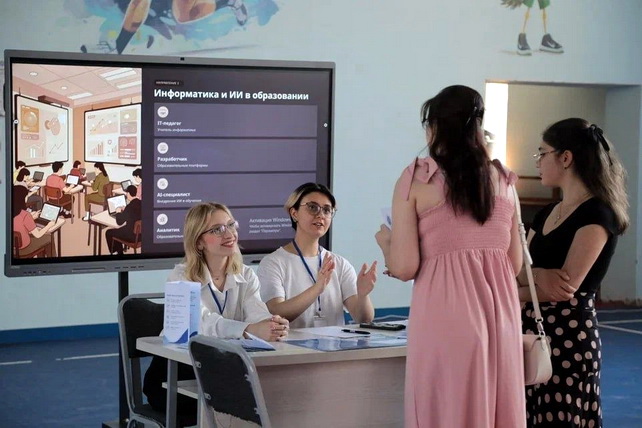
The open day held at the Tashkent branch of the Herzen State Pedagogical University of Russia served not only as a career guidance platform for prospective students but also reflected a broader trend — the growing role of inclusive education in Uzbekistan’s higher education system. The format of the event demonstrated the practical implementation of accessibility, equal opportunity, and intercultural interaction principles.
Inclusive Education as an Educational Priority
In global practice, inclusivity is increasingly regarded as one of the key indicators of university education quality. Modern educational approaches emphasize the creation of an environment in which every student, regardless of social, cultural, or physical status, has equal access to knowledge and resources.
In this context, inclusive education goes beyond working exclusively with people with disabilities and covers a broader range of objectives — from ensuring gender equality to supporting diverse educational trajectories.
The open day at the branch exemplified this approach. Participation by school students, applicants, parents, and prospective master’s students demonstrated the institution’s commitment to creating an open and accessible environment for different categories of learners.
Accessibility Practice and Individual Support
The organization of consultation zones, where specialists explained admission rules in detail and helped applicants choose educational pathways, reflects an important element of inclusion — the individualization of learning trajectories. This is particularly relevant in conditions where applicants have different levels of preparation and educational needs.
An additional factor of accessibility was direct interaction with teachers and students. Such a format reduces communication barriers and fosters a more trusting educational environment, which is a key component of inclusive policy.
Intercultural Dimension of Inclusivity
Intercultural dialogue plays a significant role in inclusive education. The workshop “Matryoshka Without Borders” demonstrated the integration of Russian and Uzbek cultural codes, contributing to tolerance and mutual understanding among students.
Such initiatives expand the concept of inclusion to include cultural diversity as an important educational resource. This is especially relevant in a multiethnic society, where educational institutions serve as platforms for strengthening social cohesion.
Infrastructure and Environment as the Basis of Inclusion
The openness of educational spaces — classrooms, laboratories, and student areas — allowed participants to assess not only the material and technical base but also the overall accessibility of the learning environment. In the context of inclusive education development, infrastructure is a key factor determining the full participation of all student groups in the educational process.
Conclusion
Inclusive higher education is not only a social mission but also a strategic resource for national development. The formation of an open and adaptive university environment not only expands access to knowledge but also creates a foundation for sustainable economic growth and social stability.
In conditions of global competition, the ability of an education system to accommodate diversity is becoming one of the key factors of its efficiency and competitiveness.