Stay up to date with the latest news
Subscribe to our telegram channel

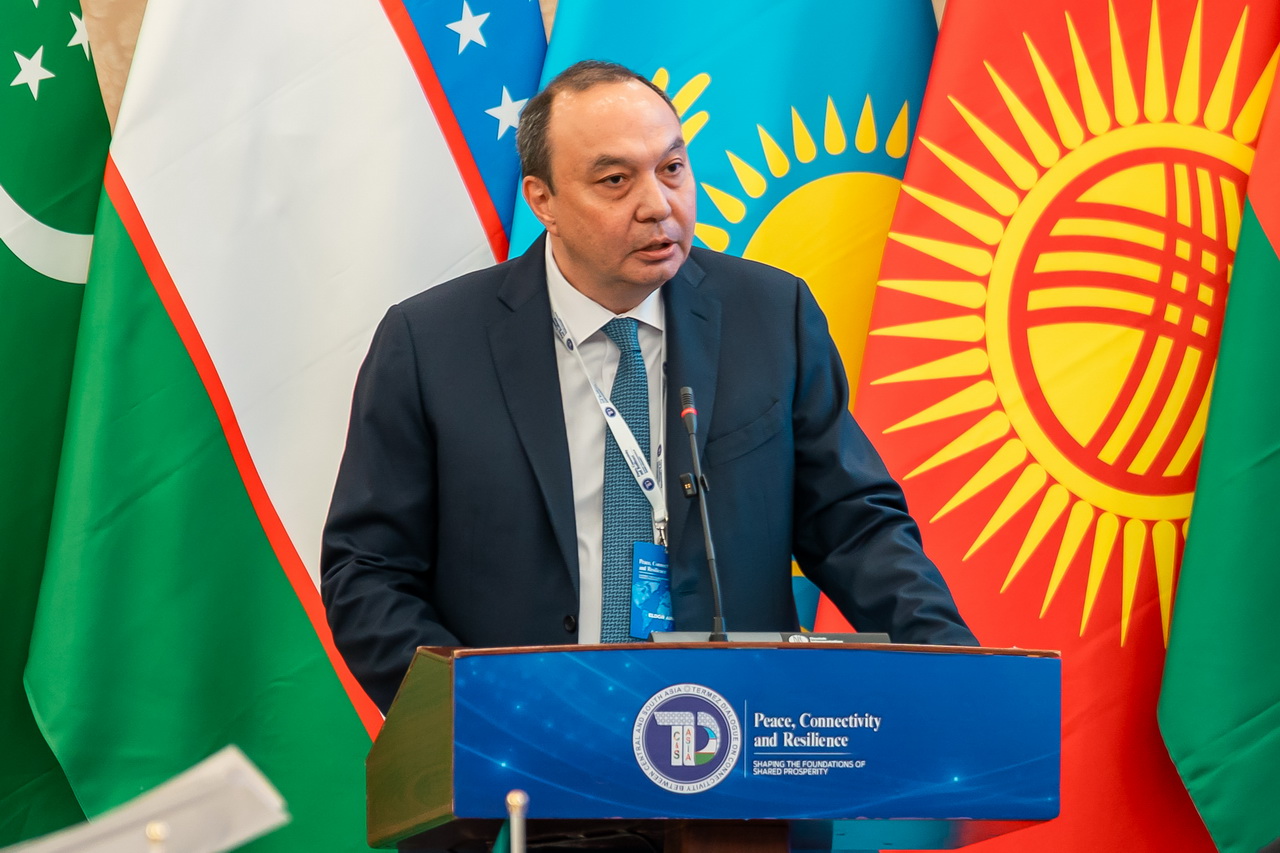
Tashkent Hosts Second Termez Dialogue on Central and South Asia Connectivity
Tashkent, Uzbekistan (UzDaily.com) — Building the Foundation of Common Prosperity."The forum is organized by the Institute for Strategic and Interregional Studies under the President of Uzbekistan and the Uzbek Ministry of Foreign Affairs, in partnership with the Conference on Interaction and Confidence-Building Measures in Asia, known as CICA.
Opening the forum, ISMI director Eldor Aripov described the Termez Dialogue as a practical embodiment of President Shavkat Mirziyoyev's initiative to strengthen connectivity between Central and South Asia.
He recalled that the initiative received unanimous international support and was enshrined in a dedicated United Nations General Assembly resolution adopted in 2022, which established a long-term legal framework for trans-regional rapprochement and recognized it as an important factor for sustainable development across Eurasia.
Aripov assessed the first year of the platform's work as yielding tangible results, saying the Termez Dialogue had proven its effectiveness in developing practical initiatives and building trust at all levels, from governments to civil society institutions.
He characterized the forum as inclusive, bringing together representatives of state bodies, international organizations, the diplomatic corps, the expert community, business circles, and civil society institutions.The agenda of the second session is structured around four thematic tracks.
The first — political dialogue and economic connectivity — is being held jointly with CICA, a partnership Aripov said reflects shared approaches: the Termez Dialogue's focus on strengthening stability through progress and constructive engagement aligns with CICA's mission.
The session covers trade expansion, the development of transport corridors, and energy cooperation as primary drivers of regional economic integration.Aripov argued that economics functions not only as a growth driver but as a security instrument, noting that interconnection through economic interests and supply chains reduces the likelihood of conflicts and tensions — an approach, he said, the Termez Dialogue consistently promotes.Climate resilience constitutes a separate agenda block.
Central and South Asia are among the regions most vulnerable to climate change, Aripov said, and environmental challenges are inherently cross-border, requiring coordinated action. Cultural and humanitarian interaction forms a fourth dimension, with the forum emphasizing the restoration and deepening of historical contacts between the two regions grounded in shared history, spiritual traditions, and centuries-old cultural ties.Aripov expressed confidence that the forum's outcomes would be reflected in a final communiqué and would contribute to further strengthening cooperation between Central and South Asia.
"Eurasia today needs not new dividing lines but spaces of trust, joint development, and open dialogue. That is the unifying mission the Termez Dialogue is called to fulfill," he said.More than 150 representatives from political, business, and expert circles and international and regional organizations are participating from countries across Central and South Asia, Europe, the CIS, the South Caucasus, the Asia-Pacific region, the Middle East, and the Americas.
Partners and participants include the UN Regional Centre for Preventive Diplomacy for Central Asia, the UN Assistance Mission in Afghanistan, the International Water Management Institute, the Center for Progressive Reforms, the Konrad Adenauer Foundation, the Berghof Foundation, PeaceNexus, Search for Common Ground, and Georgetown University, among others.