Stay up to date with the latest news
Subscribe to our telegram channel

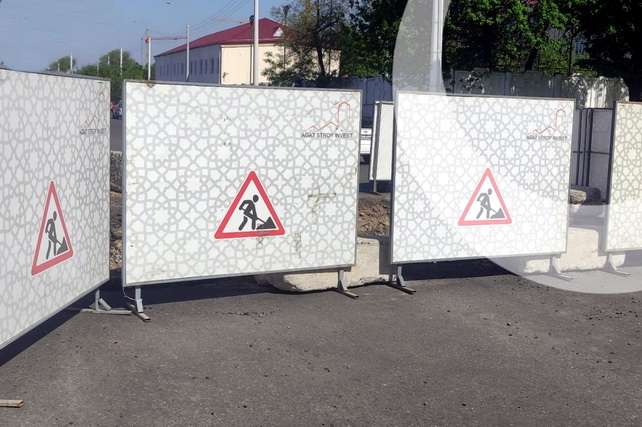
Tashkent Redesigns Traffic Flow at Sergeli Auto Market
Tashkent, Uzbekistan (UzDaily.com) — Tashkent Tackles Chronic Congestion at Sergeli Auto Market With Dedicated Access Road
Tashkent's Center for Traffic Management (TSOD) is overhauling the traffic circulation scheme around the Sergeli auto market — one of the capital's largest congestion generators — by constructing a dedicated local road that will physically separate market-bound vehicles from through-traffic on Yangi Sergeli Street.
The intervention targets a long-standing bottleneck. The Sergeli market holds 5,400 vehicles in total — 3,500 sales bays and the remainder designated parking — and hosts more than 1,800 retail outlets selling auto parts and accessories. Every day, over 1,500 vehicles enter and exit via access points directly onto Yangi Sergeli Street, a volume that has for years generated friction between decelerating market traffic and the main arterial flow, producing conflict points, queuing, and cascading delays.
The engineering solution:
A new local service road running parallel to the market perimeter will intercept market-bound vehicles before they interact with the main carriageway. Under the revised scheme, drivers will turn off Yangi Sergeli Street onto the local road, access the market from there, and re-enter the main flow via the same road on exit — eliminating the speed differential conflict that has been the primary cause of congestion.
The project extends beyond vehicle circulation. TSOD has incorporated pedestrian and cycling infrastructure into the redesign, alongside the reorganization of internal parking. New pavement markings have been applied across the market grounds, with capacity formally designated for more than 2,000 parking spaces.
Anticipated outcomes cited by TSOD include reduced load on Yangi Sergeli Street, fewer conflict points, improved road safety, and better operating conditions for public transport routes serving the area.
The Sergeli scheme is part of a broader pattern of targeted traffic engineering interventions Tashkent has pursued in recent years as vehicle ownership continues to rise faster than road capacity — a dynamic familiar to rapidly urbanizing cities across Central Asia.