Stay up to date with the latest news
Subscribe to our telegram channel

Uzbekistan Targets US$10 Billion in Food Exports by 2030
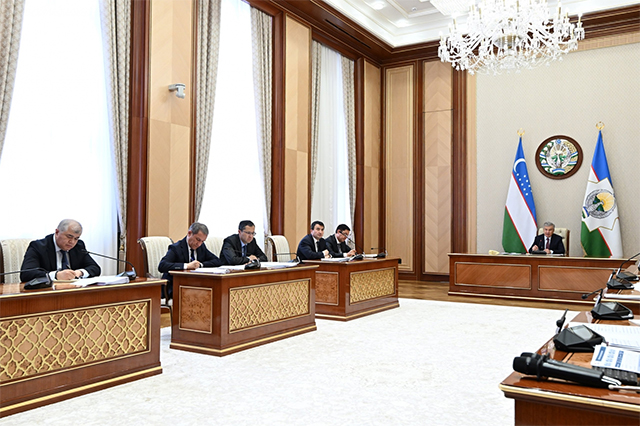
Tashkent, Uzbekistan (UzDaily.com) — Uzbekistan has set an ambitious target to increase its annual food exports to US$10 billion by 2030, as part of a broad reform agenda aimed at overhauling food safety regulation, strengthening livestock production, and expanding the country’s agricultural export capacity. The initiative was outlined during a government meeting chaired by President Shavkat Mirziyoyev, where officials reviewed systemic changes in food safety governance and rural development policy.
Authorities reported that Uzbekistan already has a substantial production base supporting food security and exports. The country utilizes around 4 million hectares of cultivated land, operates storage facilities with a capacity of 1.5 million tons, and maintains processing infrastructure capable of handling 3.5 million tons of agricultural output. These resources currently enable food exports valued at approximately US$4 billion annually.
The government plans to more than double this figure within the next decade, while also expanding export destinations by an additional 100 countries. Achieving this goal, officials stressed, requires full alignment of the national food safety system with international standards and modernization of regulatory mechanisms across the entire production chain.
A key issue identified during the meeting was fragmentation in regulatory oversight. Previously, food safety functions were distributed across three separate agencies, resulting in duplicated responsibilities and a lack of integrated data systems among sanitary, veterinary, and quarantine authorities. This structure, according to officials, created additional barriers for exporters and importers.
The discussion also addressed compliance challenges in export markets. The European Union has issued 25 warnings related to pesticide residues found in Uzbek agricultural products, highlighting the need to strengthen quality control and adopt globally recognized standards across production and export processes.
To address these challenges, Uzbekistan will establish a unified Committee for Food Safety, consolidating functions previously managed by separate agencies. The new structure will operate under a “farm to table” model, covering the entire food production cycle from cultivation to final consumption.
The reform includes replacing the existing mandatory certification system with a risk-based inspection framework, currently applied to only a small share of enterprises. An electronic rapid alert system will also be introduced to identify and withdraw unsafe products from the market.
Further changes include the introduction of mandatory processing of fruit and vegetable exports through agro-logistics centers starting in 2029, as well as the phased implementation of international risk assessment standards and Codex Alimentarius requirements across major export-oriented food enterprises.
Digitalization is a central pillar of the reform agenda. Authorities plan to deploy online monitoring systems for agricultural products, introduce an electronic “field diary” within the Agro Kumakchi mobile application, and use artificial intelligence to forecast pest outbreaks and support farmers with real-time recommendations.
In addition, a rating system for responsible farmers will be introduced, offering access to additional incentives and benefits. A unified digital platform for food safety management is expected to be launched by March 2027, integrating customs and border control systems. Officials estimate that this will reduce inspection times from nine to two days for imports and from three to one day for exports, while saving businesses up to 70 billion soums annually in logistics and storage costs.
A significant part of the meeting focused on livestock development. Officials noted that in 42% of countries worldwide, cattle populations have declined due to rising feed costs, drought, and other pressures, contributing to higher global meat prices.
Uzbekistan, however, has access to 16 million hectares of pasture land, of which only about 10% is currently utilized. To unlock this potential, a new Livestock and Pasture Development Agency will be established under the Ministry of Agriculture.
The agency has been tasked with increasing cattle numbers to 16.5 million heads, sheep and goats to 30 million, and poultry to 141 million. The government also aims to raise meat and dairy processing rates to 50% and significantly expand feed crop production.
To support livestock development, each region will designate specialized areas for animal husbandry, allowing up to half of cotton and grain land to be used for feed production with subsidized credit support. Farmers will also be allowed to build basic infrastructure such as storage facilities and silage pits on leased land without excessive administrative procedures.
Financial support measures include long-term loans of up to 10 years at 10% interest, tax exemptions for breeding livestock imports until 2029, and a range of subsidies for livestock reproduction, including payments for calves produced through artificial insemination or embryo transfer.
Additional funding of 1 trillion soums and US$50 million will be allocated at preferential rates to support 1,500 agricultural projects in 2026, expected to create 25,000 jobs and further expand cattle populations.
The government also plans to strengthen human capital in the sector by introducing specialized training programs in leading agricultural universities and preparing at least 1,000 livestock specialists annually.
At the conclusion of the meeting, President Mirziyoyev instructed officials to ensure effective implementation of reforms at the regional level, accelerate modernization of the food processing industry, and strengthen export logistics and livestock productivity across the country.
#Shavkat Mirziyoyev