Stay up to date with the latest news
Subscribe to our telegram channel

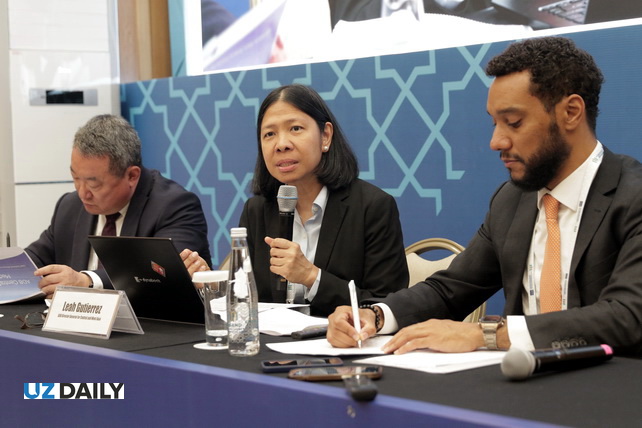
ADB Says Central Asia Can Become Regional Energy Hub
Tashkent, Uzbekistan (UzDaily.com) — Central Asia has the potential to become a key hub in the regional energy system, according to Lia Gutierrez, Director of the Central and West Asia Department at the Asian Development Bank (ADB).
Speaking at the 59th Annual Meeting of the ADB Board of Governors in Samarkand from May 3 to 6, Gutierrez said the bank is implementing a large-scale program aimed at integrating power systems and expanding cross-border electricity trade. She noted that existing interconnections in the region are largely bilateral, while new initiatives aim to build a more integrated regional energy architecture.
ADB President Masato Kanda, outlining the bank’s strategic direction, said access to energy and digital technologies is becoming a decisive factor for the region’s future development. He said that linking energy and digital networks across borders would reduce costs, expand economic opportunities, and improve energy reliability.
The ADB plans to invest about US$70 billion by 2035 in energy and digital infrastructure across Asia and the Pacific. The program aims to strengthen energy system connectivity, expand cross-border electricity trade, and improve access to digital services.
Gutierrez said one possible structural solution could be the development of a broader energy framework, including the proposed Caspian Green Energy Corridor. Such a system, she said, would allow countries in the region to connect to a shared network and expand electricity trade, thereby improving energy security and supply stability.
In discussing the macroeconomic outlook, she said Central and West Asia’s economy grew by 4.6% in 2025, but is expected to slow to 4.2% in 2026 before a gradual recovery. She cited inflationary pressures, energy risks, and external shocks as key influencing factors.
She also highlighted the impact of the situation in the Middle East, which the ADB said is affecting commodity markets, logistics, and inflation dynamics. Risks include tighter global financial conditions and weaker investment activity.
Gutierrez emphasized the need for structural reforms, including improved governance and private sector development, which she said would raise potential growth and strengthen resilience in the region. Priorities include transport connectivity, logistics corridor development, and projects under the Trans-Caspian route.
The ADB continues to expand investment in the region across energy, transport, and climate finance, while supporting regional economic corridor initiatives under the CAREC program.