Stay up to date with the latest news
Subscribe to our telegram channel

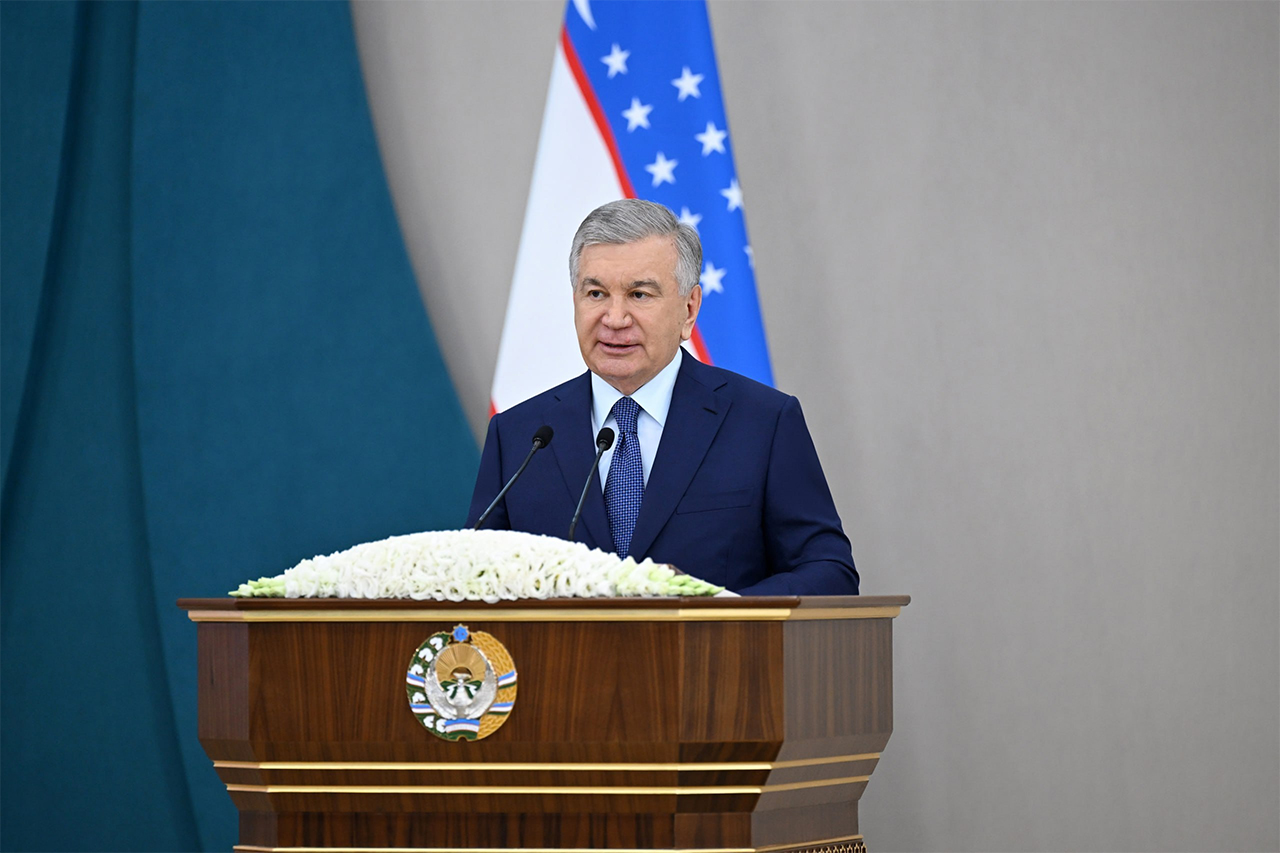
Mirziyoyev Calls for Accelerated Development of Uzbekistan's Chemical Industry
Tashkent, Uzbekistan (UzDaily.com) — A video conference meeting on the development of the chemical industry was held under the chairmanship of President Shavkat Mirziyoyev.
It was noted that the country's economy is developing dynamically, and that in recent years the industrial sector has established production of more than 3,000 new types of goods.
It was emphasised that just nine to ten years ago, mineral fertilisers accounted for the bulk of Uzbekistan's chemical output.
Over the intervening period, the industry attracted US$8.3 billion in investment and brought 87 large production facilities into operation.
Production has been established for more than 60 high-tech, high-value-added products, including PVC, green hydrogen, expanded polypropylene, and BOPP film.
This has created a raw material base for the manufacture of thousands of new product types across various sectors of the economy.
Exports from the sector have tripled, and the workforce has grown to more than 50,000 people.
At the same time, it was noted that while the country's industry as a whole grew by an average of 6.3 percent over nine years, growth in the chemical sector did not even reach 3 percent. It was also pointed out that imports of chemical products have risen to approximately US$4.5 billion per year.
It was stressed that domestic production covers less than 60 percent of internal demand and that existing capacities are not being used efficiently enough. It was further noted that value added per worker in the chemical industry is two to three times lower than in other countries.
The performance of Uzkimyosanoat JSC came under criticism. The company was found to be focused primarily on its own large enterprises, while systematic engagement with more than 5,000 other industry players — including studying their problems and proposals — remains insufficient.
In this connection, the head of state indicated his intention to meet personally with chemical industry representatives to discuss the sector's existing challenges.
Uzbekistan Identifies Reserves for Raising Value Added in the Chemical Industry
The country produces approximately 1.5 million tonnes of ammonium nitrate annually, consuming around 1.07 billion cubic metres of natural gas in the process.
It was noted that a number of developed countries are moving away from standard nitrate toward carbamide and water-soluble fertilisers in agriculture, and toward porous nitrate in the mining industry.
It was emphasised that, at a comparable production cost, porous nitrate carries twice the added value of standard ammonium nitrate.
In this regard, responsible officials and chemical enterprise managers were called upon to increase the number of such projects.
It was also cited as an example that one tonne of cyanide salts produced at the Navoiyazot facility is priced at approximately US$3,700, but when processed into adhesive materials their value can rise to US$8,000 per tonne.
Responsible authorities were instructed to initiate ten small-volume chemical projects with a combined value of approximately US$1 billion in a cluster adjacent to Navoiyazot.
It was stressed that fully engaging the country's available geological reserves could multiply added value many times over.
For example, the regions of Karakalpakstan, Surkhandarya, Kashkadarya, and Navoiy hold 550 million tonnes of sodium and potassium deposits, as well as 20 million tonnes of bentonite reserves. Processing this raw material to produce caustic soda would triple its added value.
In addition, 1.5 million tonnes of serpentinite have been identified in Jizakh region and a further 500,000 tonnes in Karakalpakstan.
Treatment with sulphuric acid can yield magnesium oxide worth up to US$5,000 per tonne. Deeper processing of serpentinite can produce nickel, chromium, and cobalt — critically important raw materials for the electrical industry.
Responsible officials were instructed to develop a three-year programme to double reserves of raw materials needed by the chemical industry, including phosphorite, halite, mirabilite, and serpentinite, and to begin implementation.
A further instruction was issued to launch projects worth no less than US$200 million for the processing of serpentinite raw materials.
The regional market for household chemicals is valued at US$2 billion. As one example, an entrepreneur in the Angren Special Economic Zone established a partnership with the globally recognised company Henkel. Henkel has since acquired that enterprise and plans to supply goods from it to Commonwealth of Independent States markets.
To expand such projects, space within one of the capital's industrial zones will be allocated for household chemicals production. US$50 million is planned for these projects, on the condition that completed facilities are sold to the private sector as ready, profitable businesses together with their brands. A further US$15 million from the Industrial Cooperation Fund will be directed toward similar projects in other regions.
Overall, responsible authorities were instructed to develop a programme for the launch of no fewer than 100 branded household chemical products.
According to analyses, global demand for mineral fertilisers is growing at 5 percent annually and will exceed US$260 billion by 2030. Demand for water-soluble fertilisers is rising particularly sharply, driven by new agricultural technologies.
Following negotiations with investors, agreements have been reached on projects in Kashkadarya region worth US$114 million with an annual capacity of 230,000 tonnes, and on projects in Syrdarya region worth US$400 million.
In total, it was noted that responsible authorities and regional governors face the task of launching 42 projects worth US$2.8 billion within three years.
As a result, by 2030 it is planned to increase nitrogen fertiliser production from 2.8 million to 4 million tonnes, phosphate fertiliser output from 400,000 to 900,000 tonnes, and water-soluble fertiliser production from 100,000 to 400,000 tonnes.
During his visit to enterprises today, the President spoke with young laboratory workers and students enrolled in dual-education programmes, and reviewed presentations by scientists. He stated that he was satisfied the sector is actively integrating science into its work, but stressed that a great deal more remains to be done.
A comprehensive system encompassing education, research, laboratories, and startups will be created within the industry.
To this end, a 60-hectare innovation, research, production, and education cluster for the chemical industry will be established in the Mirzo-Ulugbek district of Tashkent.
Within this cluster, a Centre for Chemical Technology Innovation will be built jointly with South Korea. The centre will reimburse half the costs associated with pilot and experimental work.
By the end of next year, the Tashkent Institute of Chemical Technology and the Tashkent branch of Russia's Mendeleev University of Chemical Technology will be relocated to the cluster.
The implementation of large projects in water-soluble fertilisers, polymers, household chemicals, and inorganic chemistry is generating demand for specialists in such modern fields as nanochemistry, green chemistry, supramolecular chemistry, and AI-based chemical modelling.
To meet this demand, professors, lecturers, and department heads from 35 universities that train chemical industry personnel have been assigned to specific projects.
It was stressed that training aligned with these needs must begin from the new academic year.
Overall, instructions were issued to launch a programme covering more than 350 projects in the chemical industry with a combined value of US$17 billion.
Achieving these ambitious targets will require managing the sector on the basis of evidence-based and modern approaches. In this connection, the need to transform Uzkimyosanoat was highlighted, and responsible authorities were given corresponding instructions.
During the meeting, reports were heard from the heads of chemical industry enterprises and regional administrations, and a dialogue was held with the managers of companies operating in the sector.