Stay up to date with the latest news
Subscribe to our telegram channel

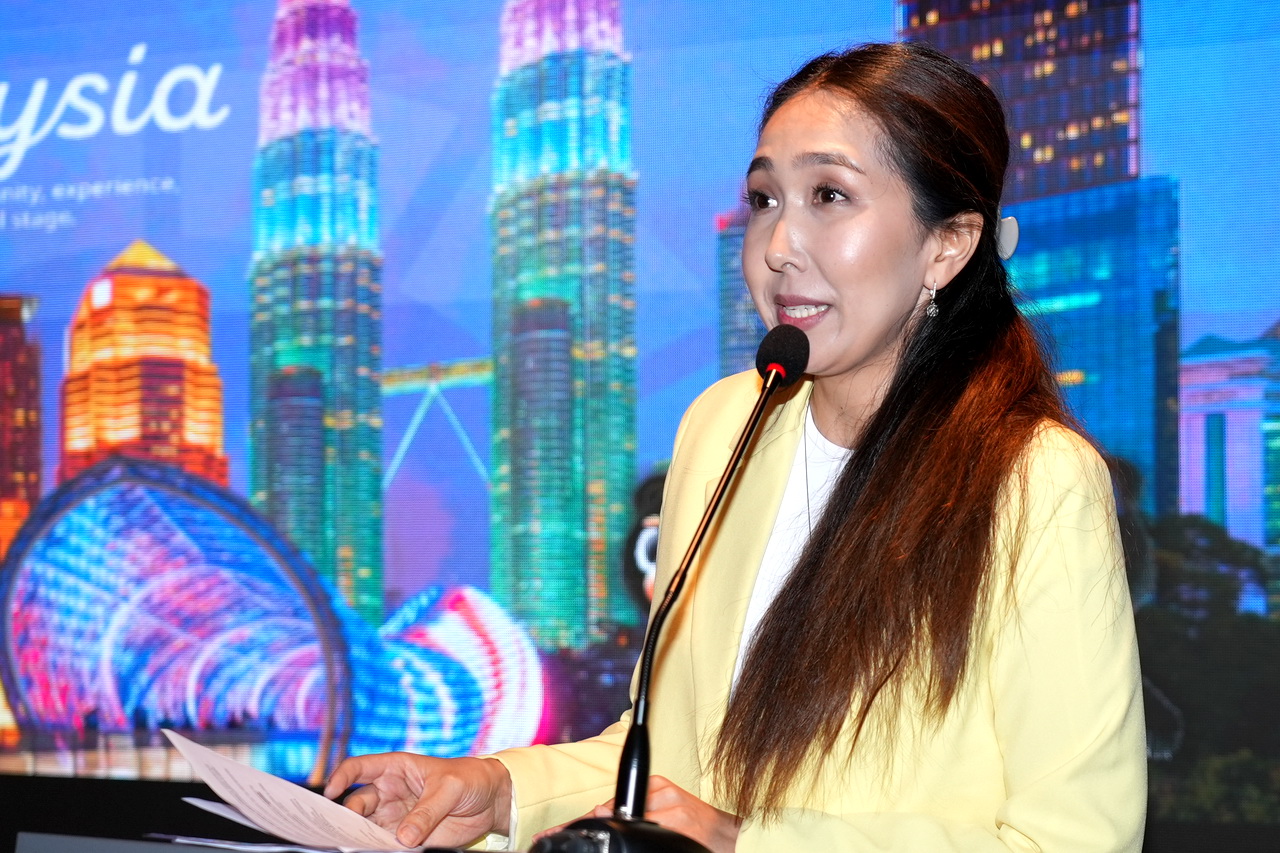
Malaysia Courts Central Asia's MICE Market in Historic Roadshow
Tashkent, Uzbekistan (UzDaily.com) — Malaysia's business events authority made its Central Asia debut this week, pitching Kuala Lumpur to Uzbek and Kazakh industry professionals as a world-class MICE destination for the first time — backed by 46% visitor growth from Uzbekistan and $104 million in bilateral trade.
The Malaysia Convention and Exhibition Bureau (MyCEB), in partnership with Tourism Malaysia's Almaty office, held back-to-back roadshows in Almaty on June 2 and Tashkent on June 4, 2026 — the first such engagements by either organisation anywhere in Central Asia. The Almaty session took place at Hotel Kazakhstan, while the Tashkent edition was hosted at the Swissôtel and drew travel industry professionals, corporate representatives, event organisers and media from across Uzbekistan. Both events were anchored by a business events presentation from Edward Lim Chee Chong, Senior Manager, Business Development Division at MyCEB, and a tourism presentation by Kamilla Chaldanbayeva, Marketing Officer at Tourism Malaysia Almaty.
"This is our very first engagement in the Central Asia region," Lim told delegates in his opening address. "We come with a clear purpose — to introduce Malaysia as a trusted, world-class destination for meetings, incentives, conventions and exhibitions. More importantly, we are here to build lasting, meaningful partnerships and explore new opportunities for collaboration between Central Asia and Malaysia."
The Tashkent event carried additional diplomatic weight. The Malaysian Ambassador to Uzbekistan, Arhan Syaftisya Shah Anuar, delivered a formal address officially declaring the MICE Sales Call 2026 programme open, marking what he described as a meaningful symbol of growing friendship and strong cooperation between the two countries.
Visitor Growth and Bilateral Ties
The roadshows arrived against a backdrop of rapidly accelerating travel flows. In 2025, Malaysia welcomed more than 85,000 tourists from across Central Asia, with Uzbekistan alone contributing more than 20,000 arrivals, according to figures presented by Tourism Malaysia Director Nor Shazly Azmi. The momentum has carried into 2026: in the first quarter, visitor arrivals from Uzbekistan surged more than 46% compared to the same period in 2025, while Central Asia as a whole recorded growth exceeding 20%.
In 2024, nearly 10,000 Malaysian tourists visited Uzbekistan, while more than 19,000 Uzbek travellers made the reverse journey to Malaysia. The bilateral trade relationship has deepened in parallel, with the Malaysia External Trade Development Corporation reporting that trade between the two countries has exceeded $104 million. More than 40 companies with Malaysian investment are currently operating in Uzbekistan, contributing to what Ambassador Arhan described as "growing market confidence and increasing economic potential."
Malaysia and Uzbekistan established formal diplomatic relations in 1992. "Since then, our relationship has flourished across many sectors including trade, investment, education, tourism and people-to-people exchanges," the Ambassador noted. The Embassy of Malaysia in Tashkent, which co-hosted the June 4 event, "remains fully committed to supporting initiatives that strengthen bilateral cooperation and deepen business relations between our two countries," he added.
Malaysia's MICE Credentials
MyCEB presented substantial credentials to justify its Central Asia push. Between 2024 and 2025, Malaysia successfully hosted 293 international conventions and 150 trade exhibitions across various industries — a record the bureau said reflects the confidence global organisers place in Malaysia's infrastructure and professional event ecosystem.
Kuala Lumpur was positioned as the centrepiece of Malaysia's MICE offering. The Kuala Lumpur Convention Centre, the country's flagship venue, can accommodate up to 15,000 delegates simultaneously, with its main auditorium alone seating 3,000. The city offers seamless airport-to-centre connectivity: 28 minutes by express rail, 45 minutes by taxi, or 60 minutes by bus from Kuala Lumpur International Airport.
"Kuala Lumpur consistently ranks among Asia's leading MICE destinations," Ambassador Arhan said, citing "world-class convention facilities, internationally recognised hotels, experienced event professionals and comprehensive government support for business events."
Beyond the capital, MyCEB's presentation covered a portfolio of venues and destination experiences spanning Penang, Malacca, Johor, Sabah and Sarawak — each offering distinct propositions for incentive programmes and corporate events. These included the heritage waterfront of Penang's George Town, the UNESCO World Heritage city of Malacca, the integrated resort of Desaru Coast in Johor, and the colonial-era North Borneo Railway in Sabah.
Signature corporate experiences highlighted to Uzbek delegates included the Spice Market networking platform, a hands-on silversmithing workshop at Royal Selangor, and a Vespa culinary night tour of Kuala Lumpur — all positioned as differentiated incentive programme components for the Central Asian market.
New infrastructure was also spotlighted. Among recently completed or forthcoming assets: the Penang Waterfront Convention Centre, the BCCK Phase 2 expansion, the Sabah International Convention Centre (SICP), and a pipeline of new luxury hotels in Kuala Lumpur including a Park Hyatt located on the second-tallest building in the world, a Waldorf Astoria set to open shortly, and the recently launched Hyatt Centric and Imperial Lex properties.
Government Incentive Programme
A central element of MyCEB's pitch was its structured financial support programme for qualifying incentive groups travelling to Malaysia under Visit Malaysia 2026. The scheme operates across three eligibility tiers — Incentive A, B and C — with reimbursement support ranging from $7,000 to $50,000.
To qualify for the base tier, a group must comprise at least 50 international delegates, stay a minimum of two nights in four- or five-star hotels, and submit an application 30 days before arrival. Groups of 50 or more are entitled to welcome souvenirs and reimbursement on food and beverage costs or admission tickets. Groups exceeding 100 delegates gain access to additional benefits, including Malaysian cultural performances, branded photo booths or an airport hospitality desk.
"If your group is more than 100, on top of the two items, you can choose if you want a Malaysian cultural performance, or photo booth, or airport hospitality desk — and you can claim back the cost," Nurul Nadia Naziran, the MyCEB representative who delivered the business events presentation in Tashkent, told delegates. She also noted flexibility for smaller groups: "If there are lower than 50 international delegates but they are staying six or seven nights, you can come and approach us — we will assess the itinerary and programme and maybe we can also help."
The programme is valid through the end of 2026, subject to budget availability and approval.
Connectivity: Direct and Improving
Aviation connectivity emerged as a recurring theme across both roadshows, with organisers framing expanding flight options as a structural enabler of the Malaysia–Central Asia tourism corridor.
From Tashkent, travellers currently have access to direct services to Kuala Lumpur operated by Uzbekistan Airways and Batik Air Malaysia. Batik Air additionally operates a weekly direct service to Langkawi — Malaysia's duty-free island archipelago in the Andaman Sea. AirAsia's Tashkent–Kuala Lumpur route is presently suspended, but the carrier is scheduled to resume operations from August 1, according to the Tourism Malaysia presentation. From Almaty, AirAsia X operates five weekly flights to Kuala Lumpur. Connecting itineraries via Dubai, Sharjah, Doha, Istanbul and Bangkok also serve both markets.
Batik Air's Tashkent-based representative provided operational detail to the assembled travel agents and tour operators. The carrier's Tashkent–Kuala Lumpur service is operated on an Airbus A330, configured with 365 seats including 12 in business class, with a full-service model covering meals, seat selection and carry-on baggage in all fare types. The airline offers group fares starting from 10 passengers: a 30–50% deposit locks in seats and pricing, with passenger name lists required no later than two days before departure. The remaining balance is due three weeks ahead of travel. "You can lock in seats at a fixed price and advertise to your customers at that rate — many operators are already doing this," the representative noted.
The carrier maintains 14 interline and codeshare partners, allowing ticketing in combination with other airlines to extend reach across the region. The Tashkent representative also flagged that in-flight entertainment is delivered via personal device: passengers connect to the onboard Wi-Fi and access media through a QR code.
"As connectivity continues to improve, we believe Malaysia will become even more accessible for travellers from Uzbekistan and the wider Central Asia market," Nor Shazly Azmi said.
Tourism Offering: From Kuala Lumpur to Borneo
Kamilla Chaldanbayeva's tourism presentation offered Uzbek and Kazakh travel professionals a detailed destination overview spanning both peninsular Malaysia and Malaysian Borneo.
Kuala Lumpur was presented as a multifaceted urban destination combining the iconic Petronas Twin Towers — accessible from 140 cities via 70 airlines — with cultural landmarks including the Batu Caves Hindu temple complex, the National Museum, and the colonial-era Sultan Abdul Samad Building. The city's Bukit Bintang district and the Suria KLCC mall adjacent to the Petronas Towers were highlighted as premium shopping destinations, with prices noted as lower than comparable European retail.
Langkawi, described as the Jewel of Kedah, was positioned as the most popular island destination for the Central Asian market: an archipelago of 104 islands holding UNESCO Geopark status, offering duty-free shopping, luxury resorts, rainforest, and the Langkawi Sky Bridge. Batik Air's weekly Tashkent–Langkawi service was cited as a direct gateway.
The state of Terengganu on the east coast of peninsular Malaysia — less familiar to Central Asian travellers than Langkawi — was specifically flagged as an underexplored opportunity, home to the pristine Redang Island marine reserve, the Perhentian Islands popular with divers and younger travellers, and the secluded Kapas Island.
Penang, a UNESCO World Heritage Site, was presented as Malaysia's food capital, combining colonial architecture, street art, heritage temples and gastronomy in the historic core of George Town. Malacca, a second UNESCO Heritage city reachable from Kuala Lumpur in approximately two hours, was highlighted for its Baba-Nyonya cultural heritage and its centuries-long history as a trading port under Portuguese, Dutch and British influence.
On Borneo, the presentation covered both Sabah and Sarawak. Sabah was positioned around Mount Kinabalu — Southeast Asia's highest peak — and Sipadan Island, ranked among the world's top ten dive sites. Sarawak was presented through its indigenous Iban longhouse communities, the Niah Caves UNESCO site, and the charming riverside capital Kuching, whose name translates as "cat" in Malay and whose cat-themed civic identity was noted as a distinctive travel talking point.
For family travel, Chaldanbayeva highlighted Malaysia's theme park and entertainment infrastructure, including Genting Skywalk, Sunway Lagoon water park, and Legoland Malaysia. Malaysia requires no visa for citizens of Uzbekistan and other CIS countries for stays of up to 30 days. All travellers are required to complete the Malaysia Digital Arrival Card — an online pre-arrival registration — at least three days before departure.
Broader Strategic Context
Both roadshows were framed explicitly within Malaysia's Visit Malaysia 2026 national tourism campaign, which the Malaysian government has positioned as a platform to drive high-value international tourism, foster cross-border partnerships, and strengthen Malaysia's standing as a global business events hub.
"MICE is not merely about meetings and conferences," Ambassador Arhan said in his closing remarks. "It is about creating conversations that lead to partnerships, partnerships that lead to investments, and investments that contribute to sustainable economic growth. It brings together professionals, innovators, entrepreneurs and decision-makers to exchange ideas and build a future of sustainability."
Edward Lim echoed the longer-term ambition: "We strongly believe that the relationship between Malaysia and Central Asia holds tremendous potential. Today's engagement is just the beginning. We look forward to working closely with our partners in Uzbekistan to create more opportunities, strengthen connectivity and welcome even more business events and incentive groups to Malaysia."
Whether the June roadshows translate into measurable booking growth for Malaysia's MICE sector will depend in part on follow-through — both in sustaining aviation capacity and in converting the partner relationships formed this week into contracted programme business. For now, MyCEB has planted its flag in a market that, by its own data, is already growing faster than almost any other source region it currently tracks.