Stay up to date with the latest news
Subscribe to our telegram channel

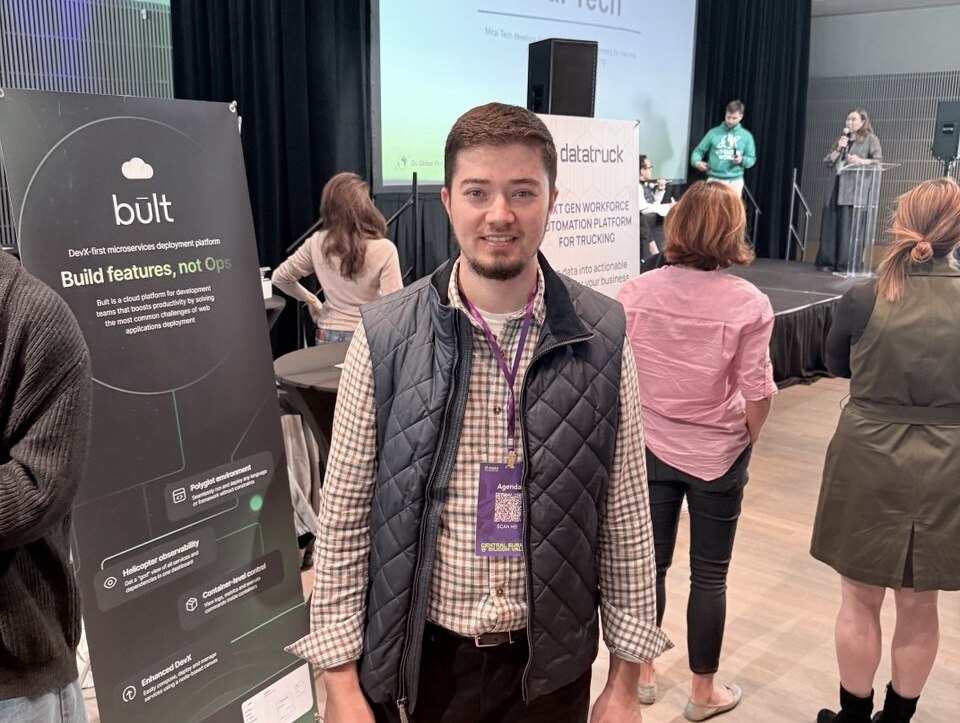
Lazizbek Ravshanov, AI/ML specialist and DevOps engineer
Tashkent, Uzbekistan (UzDaily.com) — In American industrial technology, the shift from manual to automated, data-driven processes is key. Lazizbek Ravshanov, AI/ML specialist and DevOps engineer, aims to set new efficiency standards in U.S. transportation with scalable AI infrastructure.
Cities like San Francisco and Atlanta are not endpoints for Lazizbek; they are proving grounds. His journey began in a Jizzakh classroom, not with Silicon Valley gadgets. Now, he aims to develop 3-tier applications in logistics, finance, and research, as well as Artificial General Intelligence (AGI).
How a Postcard Redefined Reality
Many engineers recall a computer as their first toy. For Lazizbek, the catalyst was a postcard. In the 5th grade, his teacher, Ruslan Abdullayev, returned from a NASA training program in Florida with photos of the Kennedy Space Center. In a town where technology felt like a distant luxury, these images of real rockets were a "window into another world".
“I grew up in a structured, limited environment—school, sport, and home,” Lazizbek explains. “Seeing those rockets planted a question: How are things like this built, and who builds them?” This realization is the first step for any aspiring specialist: moving from a consumer mindset to a builder mindset. For a kid in a regional town in Jizzakh, the path to NASA-level technology isn't direct. Lazizbek identified English as the primary API for global knowledge. While he was in primary school, he observed high school students like Omon Narzikulov, who won the FLEX (Future Leaders Exchange) program. He didn't just envy the success; he analyzed the requirements: mastery of language and a proactive attitude.
The Strategic Education: Choosing the Right Major
After building a foundation at Jizzakh College of Transport and Information Technology, Lazizbek moved to the U.S., choosing the University of Cincinnati, majoring in BSIT in Data Technologies.
Lazizbek’s major shows market insight. In big data, "Data Technologies" means understanding the information lifecycle, not just coding. He concentrated on networking, scalability, and system failures. He views education as the meeting point of strong principles and real-world application; theory without practice is abstract, and practice without fundamentals lacks substance.
This strategy gave him the "technical depth" he values today. The takeaway for students: don’t just learn coding—learn the infrastructure that enables scalable code.
Transforming the Trucking Industry
Lazizbek’s current professional focus is a critical juncture where specialized AI/ML engineering meets the intricate demands of the $800 billion U.S. transportation sector. His technical initiatives are centered on architecting AI-driven automation frameworks that enable industrial entities to transition from reactive operational models toward a new standard of predictive precision.
Lazizbek currently has ideas in FreightTech: The Safety and Compliance Platform for the U.S. trucking industry, which must meet strict federal safety regulations. Presently, many companies manage compliance manually, increasing liability risks. The Lazizbek platform aims to use deep learning to monitor compliance in real time by analyzing operational data, regulatory updates, and incident reports. This will allow companies to identify and address risks before they escalate, helping them maintain high safety ratings, which are vital for insurance and reputation.
The startup he is willing to build is a Repair Shop Workflow Automation. Heavy-duty repair shops are the nervous system of logistics. Currently, they are plagued by fragmented, manual processes. Lazizbek has an initiative in developing an integrated system that automates the entire loop: build, test, and implement. The expected result: Moving from manual paperwork to data-driven operations reduces vehicle downtime, thereby directly impacting fleet profitability.
Technical Leadership: DevOps as the Foundation for AI
In computer science, AI is often called the brain, while DevOps is the nervous system that enables reliable operation at scale. Lazizbek demonstrated impact by automating infrastructure with Terraform at Evolve Cyber (cutting deployment time 30%). He used Kubernetes to orchestrate environments for scalability and stability, and optimized AWS to cut hosting costs 15%. These show his belief in MLOps as crucial for high-stakes AI.
Before his U.S. career, Lazizbek overgone a training at 42 Abu Dhabi, a rigorous, scholarship-based IT program in the UAE. He excelled as a student mentor, guiding 500+ peers in CS, C, and Bash, reviewing code, and leading workshops. Mentor Marcos Muller Habig urged him toward the U.S., shifting his career trajectory.
The Vision: AGI and the Bridge to Uzbekistan
At the University of Cincinnati, Lazizbek focused on AGI research. To him, AGI means a shift from narrow, task-based models to reasoning systems. He is motivated to contribute to the breakthroughs needed for AGI.
Lazizbek’s global vision is rooted in his ties to Uzbekistan. He sees the country’s startup scene, bolstered by a $2 billion investment goal by 2030, as a key site for innovation. Lazizbek aims to bridge U.S. expertise and capital with emerging Uzbek talent, fostering “brain gain” for the next generation.
A Launchpad, Not an Adjustment
Ravshanov’s rise from a Jizzakh student to a U.S. AI architect highlights the importance of intentionality.
“Treat your first year abroad not as a period of adjustment, but as a launchpad,” he says. “Build discipline early, seek technical depth, and choose your environment carefully. Your circle influences how big you think you are.” In high-stakes AI, Lazizbek shows the "ceiling of context" can be broken: it takes a blueprint, solid fundamentals, and resilience to persist when quitting seems easier.
Author: Dilnoza Abdukarimova