Stay up to date with the latest news
Subscribe to our telegram channel

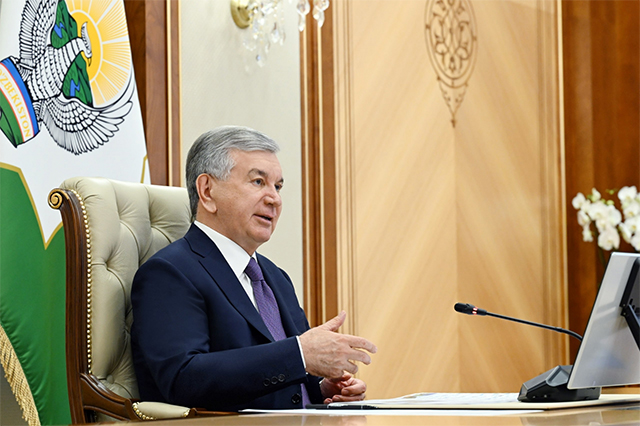
Uzbekistan approves eco fines reform, waste projects
Tashkent, Uzbekistan (UzDaily.com) — President of Uzbekistan Shavkat Mirziyoyev reviewed proposals on environmental protection, sustainability, waste management reform and the development of protected natural areas, and approved the initiatives, issuing instructions for their implementation on 30 April.
One of the central issues raised was the inefficiency of the current system of environmental sanctions. The number of administrative environmental violations increased from more than 47,000 cases in 2024 to over 59,000 in 2025. It was noted that the mismatch between fines and the actual damage caused to nature creates a situation in which some enterprises find it economically выгоднее (more profitable) to pay fines rather than eliminate violations.
In this regard, it was proposed to combine administrative fines and compensation for environmental damage into a single financial penalty and align it with international practice. The reform will apply to illegal extraction of non-metallic materials from riverbeds, water pollution, illegal logging, exceeding emission limits, dust pollution from construction sites, and the burning of waste in unauthorized locations. A simplified enforcement procedure is also envisaged: if a company admits guilt, the National Committee on Ecology and Climate Change will be able to impose the sanction directly, while disputed cases will be referred to court.
The preservation of the Ugam River, a key water artery within the Ugam-Chatkal National Natural Park that supplies the Chirchik River basin, was also discussed. In recent years, declining water levels and deteriorating water quality have been recorded, posing risks to riverbanks, aquatic life and biodiversity. It was proposed to designate the Ugam River and surrounding areas as a state hydrological natural monument, restrict construction and earthworks in coastal zones, and develop a master plan for improving the river’s ecosystem. Authorities also plan to inventory facilities in water protection zones and consider closing or relocating those that fail to meet environmental standards.
In the solid waste management sector, coverage of sanitation services across mahallas reached 88% in 2025 and is expected to increase to 90% this year. By 2030, the number of landfills is planned to be halved. In 2026, 28 waste transfer stations are to be built, with the total number expected to reach 70 by 2030.
At the same time, six investment projects to generate electricity from municipal waste are being implemented in Andijan, Namangan, Fergana, Samarkand, Kashkadarya and Tashkent regions, with a combined value of US$933 million. Once operational, they are expected to process 3.6 million tonnes of waste annually and generate 1.6 billion kWh of electricity. Preparations have been ordered for a second phase involving five additional plants worth US$633 million.
Another major project involves the creation of the first integrated hazardous waste management platform in the CIS in Navoi region. The project is valued at US$260 million and will have a processing capacity of 330,000 tonnes per year. It will integrate laboratory classification, physical, chemical and thermal processing, a dedicated landfill and the production of RDF fuel.
Construction waste has increased from 1.2 million tonnes in 2017 to 1.9 million tonnes in 2025. To address this, a digital platform is proposed to track construction waste using GPS in real time, along with mandatory compliance with disposal contracts upon project completion. Illegal dumping is to be identified through photo and video monitoring.
Plans for protected natural areas include strengthening protection of the Yaziyavan site in the Fergana National Park using drones and digital monitoring, as well as developing a dendrological garden and tourism infrastructure. Similar measures are planned in the Ovjazsai-Sinegorye National Park to promote eco-tourism while preserving mountain ecosystems.
Preparations are also underway for ECO EXPO Central Asia 2026 and the 8th Assembly of the Global Environment Facility to be held in Samarkand. The events are expected to bring together around 2,500 participants from 186 countries, including 40 donor nations and more than 50 international environmental organizations.